Yang Chengfu’s Ten Important Points: A Guide to Taiji Quan Practice
Most practitioners of Yang Style Taiji Quan will be familiar with Yang Chengfu’s Taiji Quan Shi Yao (太極拳十要) – Taiji Quan Ten Important Points.
Common knowledge is that the Ten Important Points were transmitted orally by Yang Chengfu to his disciple Chen Weiming. Due to this, many people wrongly assume that Yang Chengfu was not literate. In fact, Yang Chengfu, although he did not possess a high level of sophisticated skill, he did personally write his major works, which were then refined by his disciples, mainly Chen Weiming and Zheng Manqing (Cheng Man-Ch’ing).
The first time the Ten Important Points appeared in English was in the book T’ai Chi: The Supreme Ultimate Exercise for Health, Sport, and Self-Defense, coauthored by Cheng Man-Ch’ing and Robert W. Smith (Tuttle Publishing, 1967), making this one of the earliest English-language books published on the art of Taiji Quan.
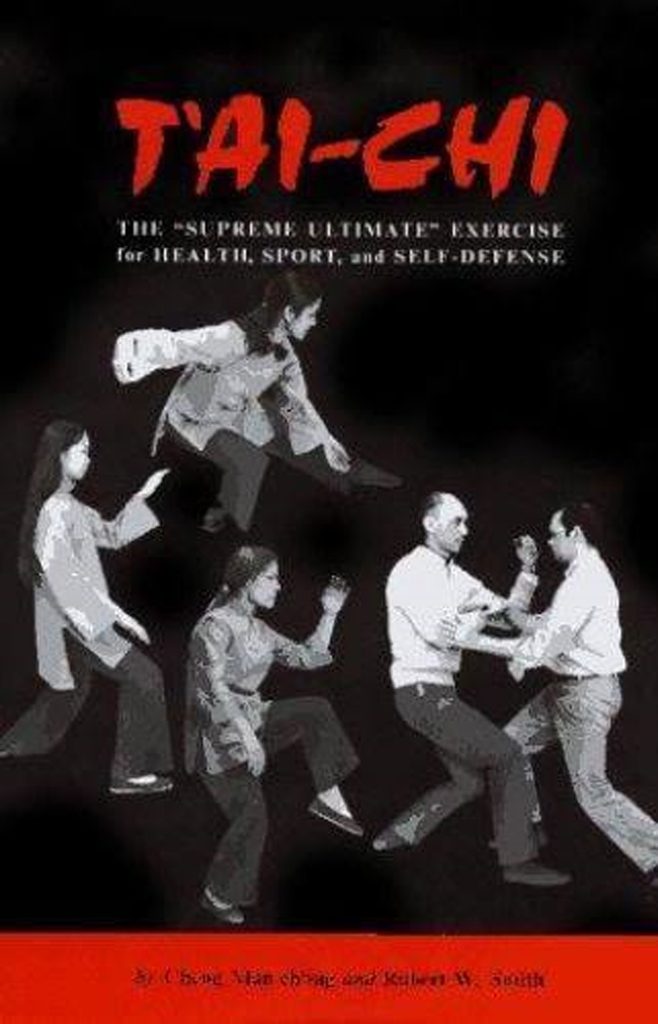
I purchased this book in the early 1970s, but at that time I had not yet developed an appreciation of the Ten Important Points. Over the years, as my experience in Taiji Quan deepened, I returned to them again and again, and I researched other books that proposed different interpretations and order of importance of the Ten Important Points.
What is true is that Yang Chengfu’s Ten Important Points have served as foundational guidelines in the practice of Yang Style Taiji Quan for nearly 100 years. They are listed here in order with the Pinyin and English, along with my interpretation.
1. Xu Ling Ding Jin – A lively energy reaches the head top.
By lifting or suspending the head top, with the attention placed on the Bai Hui point at the crown of the head, lengthens the neck and spinal column. This must be done naturally so as not to create tension in the neck and must be maintained from the start to the end of your Taiji Quan practice.
I often tell my students, “A lively energy reaches the head top, always,” so that they are encouraged to cultivate this posture in daily activity.
2. Han Xiong Ba Bei – Contain the chest and expand your back.
Relax the chest but don’t withdraw inward as this will cause your back to hunch. If you space your arm one hand-width from your armpit it will naturally expand the back. This posture will sink your breath to the Dantian and expand your Qi across the back to your arms and fingertips.
3. Song Yao – Relax the waist.
I believe that this point is often misinterpreted, because Yao, the waist, is not what is intended in Taiji Quan. Yao here is not the outer waist but rather is the narrow part of the spinal column above the sacrum, generally where the Ming Men acupoint is located.
I view the Yao like the hub of a wheel. It is the hub that turns the spokes and the outer wheel. Achieving relaxation in this area is not easy. Cultivating an upright and comfortable posture, neither lax nor rigid, is the way to get there.
4. Fen Xu Xi – Distinguish between empty and fullness.
The interpretation of this point is often referred to insubstantial and substantial, and many teachers apply this principle to both arms and legs.
Since Taiji Quan advocates avoiding double weighting and promotes bearing the weight mostly on one leg, the leg that bears most of your weight is Xi (Solid), and the other leg which bares less weight is Xu (Empty).
The only time one of your legs is completely empty is in postures such as Golden Rooster Stands on One Leg, or in Lift Hands, Play the Pipa, White Crane Spread its Wings, where the foot is gently placed on the floor and weight is borne by the supporting leg.
5. Chen Jian Zhui Zhou – Sink the shoulders and drop the elbows.
Raising the shoulders with affect the proper functioning of the diaphragm and will cause the Qi to rise and make the body unstable. Sinking just the shoulders is not enough since the lifting of the elbows will cause your shoulders to stiffen and rise. That is why Yang Chengfu also emphasized “drop the elbows.” Dropping the elbows is key when issuing force (Fa Jin) because it allows the energy to reach your fingertips.
I am constantly reminding my students about dropping the elbows and I see this flaw often in competition.
6. Yong Yi Bu Yong Li – Use intent and not brute force.
This principle seems straightforward, but many people struggle to achieve it even after years of practice. Some have a hard time achieving softness and others are so loose that they are empty.
You must guide your movement from beginning to end and not look only at the final destination of any particular posture. Apply the principle of “No Excess, No Insufficiency” when executing the movements of a form. Use no more and no less force than is needed to move your limbs or your step.
Practice one movement repeatedly, paying special attention to each segment of that movement. And while moving, be mindful of your posture.
7. Shang Xia Xiang Sui – Upper and lower body follow each other.
This is often translated as harmonize or coordinate the upper and lower body. It may be best summarized by considering the concept of “One part moves every part moves; when one part stops every part stops.”
Be mindful that movement (or “energy,” the term I prefer) originates in your feet, rises through your legs, is directed by the waist, flows through your back, and extends through the arms to your fingertips.
8. Nei Wai Xiang He – Harmonize external and internal.
This is deep principle that will require a separate, more extensive post to be addressed properly. In all Nei Jia (Internal martial arts), Three External and Three Internal Harmonies are emphasized. Following is a brief explanation.
Wai San He – Three External Harmonies: Shoulders harmonize with the hips. Elbows harmonize with the knees. And the wrists/hands harmonize with the feet/ankles.
Nei San He – Three Internal Harmonies: Heart/mind harmonizes with intent. Intent harmonizes with Qi. And Qi harmonizes with force.
9. Xiang Lian Bu Duan – Continuity without interruption.
From beginning to end in your practice, the movements flow without gaps. Many Taiji texts use the example: Move like a great river. The movements should be slow and even, circular and continuous. Light, but not empty.
10. Dong Zhong Qiu Jing – Seek stillness in motion.
I interpret this principle to be an internal concept that refers to Xin (Heart/mind). While moving, you must remain centered and display a spirit of calmness and tranquility. The explanation is simple, but the concept is broad and deep, perhaps the most complex of the Ten Points.
A Final Word
While I reference all of the Ten Important Points in classes, I emphasize the following points in this order in nearly every class:
- A lively energy reaches the head top, always.
- Sink the shoulders and drop the elbows
- Contain the chest and expand the back
- Continuity of movements
- Use intent and not brute force
The posts on this Blog reflect the knowledge I have received from my teachers, and the volumes of information I have accumulated while doing research and conducting interviews with many masters, during the years of publishing the Wu Gong Journal and the Journal of Chinese Martial Arts. All the material published on this Blog is copyrighted. — Nick Scrima