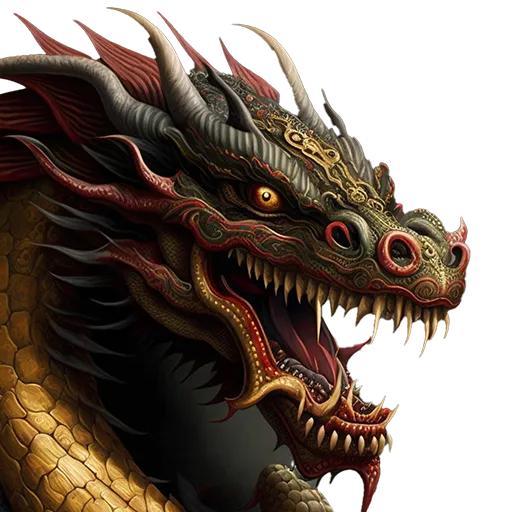
Gong Fu Training Apparatus: Stone Locks
Chinese martial arts have a rich history whose origins span back millennia. Besides the different combative arts and weapons, all sorts of training apparatus were developed to strengthen and condition the body. Some of this training apparatus is still in use today. This post will feature Stone Locks.
Origins
The Shi Suo (石鎖) – Stone Locks, are said to have evolved during the Tang Dynasty (618-907) and were used to train soldiers in military camps. At one time they were also used to demonstrate strength during the Wu Ke Ju (武科举) – Imperial Military Examinations. They are made of stone and are so named for their resemblance to the ancient Bronze Locks used to seal doors.
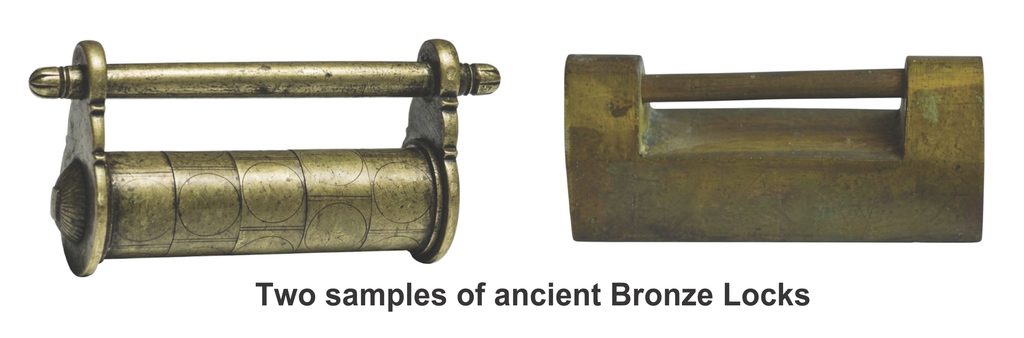
Components of the Stone Lock
The Stone Lock consists of 9 components:
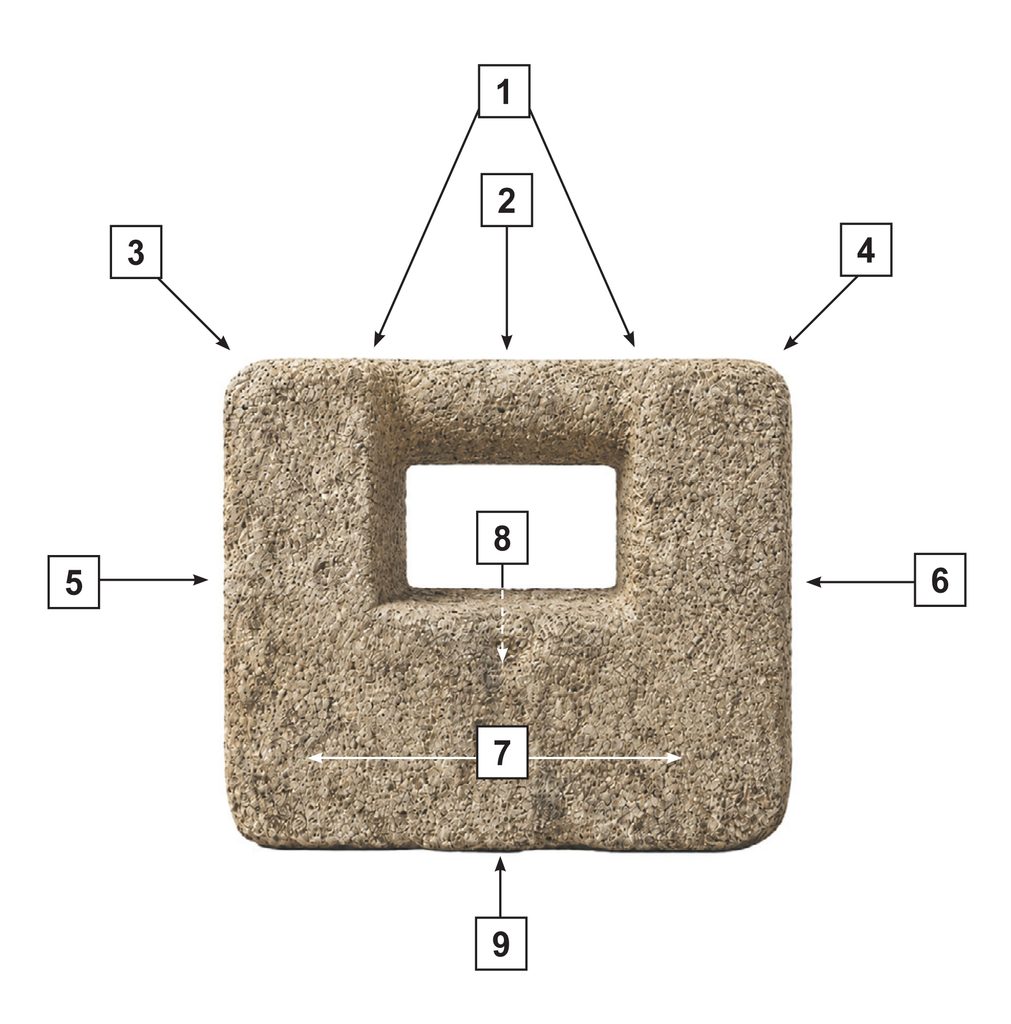
- Suo Mian (锁面) – Lock Face (top surfaces)
- Suo Huang (锁簧) – Lock Spring (handlebar)
- Suo Tou (锁头) – Lock Head
- Suo Wei (锁尾) – Lock Tail
- Tou Mian (头面) – Head Face
- Wei Mian (尾面) – Tail Face
- You Mian (右面) – Right Side (front side)
- Zuo Mian (左面) – Left Side (rear/opposite of front)
- Suo Bei (锁背) – Lock Back (base/bottom surface)
Types of Stone Locks
Stone Locks vary in size. Some can weigh upwards of 100 pounds; others can be just a few pounds and meant to be used in pairs. Most Stone Lock training is conducted solo, but some exercises involve tossing the Stone Lock to a partner.
Methods of Training – Full Body Strengthening and Conditioning
Although the weight is equally balanced on both sides, the center of gravity lies below the Stone Lock’s handlebar. This makes balancing the Stone Lock while swinging it more difficult to manage and requires the engagement of the body’s core and multiple muscle groups.
Except for small Stone Locks, which can be used to practice thrusting strikes, most exercises involve circular swinging actions. These exercises fall under the category of circular weight training, which includes clubs and kettlebells.
Zheng Jing (整劲) – Whole Body Power
The Stone Locks require momentum to move the weights in arcs, circles, or other rotational patterns. Training includes methods of tossing and catching the Stone Lock; balancing the Stone Lock horizontally on the upper arm and elbow; supporting the Stone Lock vertically on your fist; and other balancing methods.
The methods used in traditional Chinese martial arts training and those used by strongman training can differ. The former is to develop functional strength and whole-body power, which enhances martial skills. The latter is to demonstrate physical power, which, although impressive, has little function in martial arts.
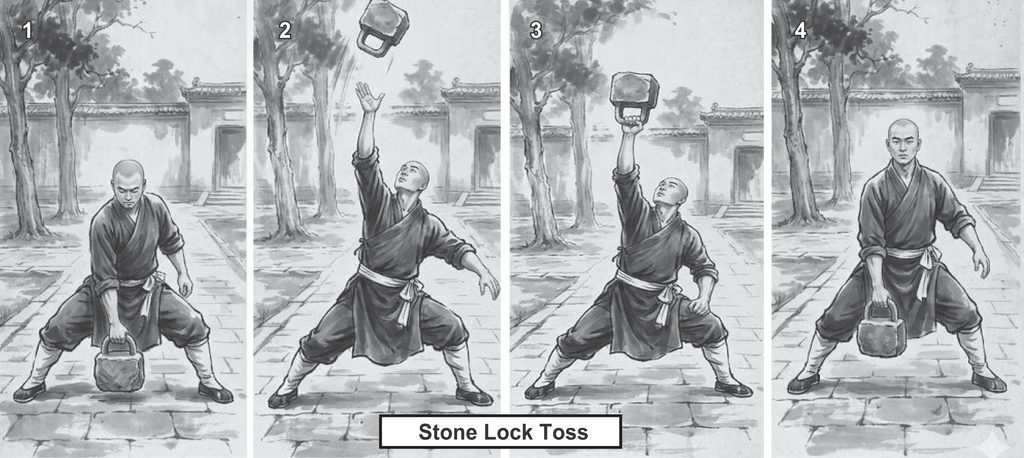
Note: The images included here are not for instructional purposes. They simply demonstrate one of the countless training exercises that can be performed with Stone Locks.
Impact of training
While the whole body is impacted by training, here are the key muscle groups that are affected by Stone Lock training.
The Core: Swinging actions extend the Stone Lock outside of one’s center of gravity. This requires the engagement of a complex group of muscles referred to as core muscles. These wrap around the entire trunk and include the abdominal wall and lower back and affect the hips and pelvis.
The Grip and Forearms: The swinging and tossing of the Stone Locks greatly improves grip and forearm strength, which are essential for Qinna and Shuai Jiao techniques. Strong forearms also enhance the quality of your punches and strikes.
The Glutes: Many of the swinging actions of the Stone Locks engage the glutes, lower back, and hamstrings. The explosive hinge motion develops a good root as you must stabilize your posture while the momentum swings the weight away from your center of gravity.
Cardiovascular Conditioning: Training with Stone Locks quickly elevates the heart rate and triggers the afterburn effect; it promotes a high caloric burn rate per minute.
The Past and the Present
Over time, heavy wooden blocks replaced the Stone Locks since they could be easily damaged when dropped and were not practical to use indoors. The wooden blocks can still be found in some traditional Gong Fu schools.
Today, Stone Locks have become popular in China and there are many competitions, held outdoors, that feature different events ranging from lifting heavy Stone Locks to tossing the Stone Locks, and even events that incorporate lifting the Stone Locks while in stressful positions.
Comparing Stone Locks and Kettlebells
There are some similarities between the Stone Locks and the kettlebells, mainly the handlebar and the center of gravity. Many exercises done with Stone Locks can be duplicated with kettlebells except for the tossing and balancing skills.
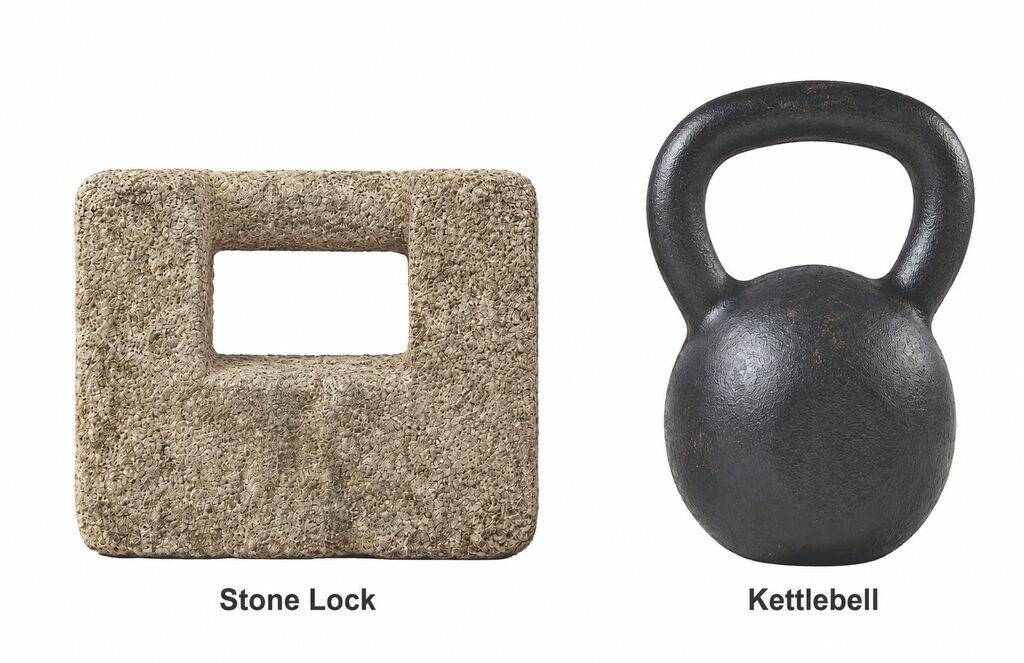
I use kettlebells and clubs for my own training, and I incorporate tossing exercises where I toss the kettlebell and catch it with the opposite hand. These are controlled tosses that are far removed from some of the tossing exercises performed with traditional Stone Locks.
Note: Some images were digitally produced.
The posts on this Blog reflect the knowledge I have received from my teachers, and the volumes of information I have accumulated while doing research and conducting interviews with many masters, during the years of publishing the Wu Gong Journal and the Journal of Chinese Martial Arts. All the material published on this Blog is copyrighted. — Nick Scrima